Best Time to Visit Christ the Redeemer: Month, Season and Hour
Corcovado's summit runs its own weather, separate from the beaches below, and no one, not the operators, not us, can promise you a clear view on any given morning. What we can give you is the real pattern: which months run driest, which hours tend to stay clearest, and when the plateau gets crowded enough to change your plan. All of it below comes from Brazil's national meteorological institute and from what operators and visitors consistently report, never from a guess.
Quick answer
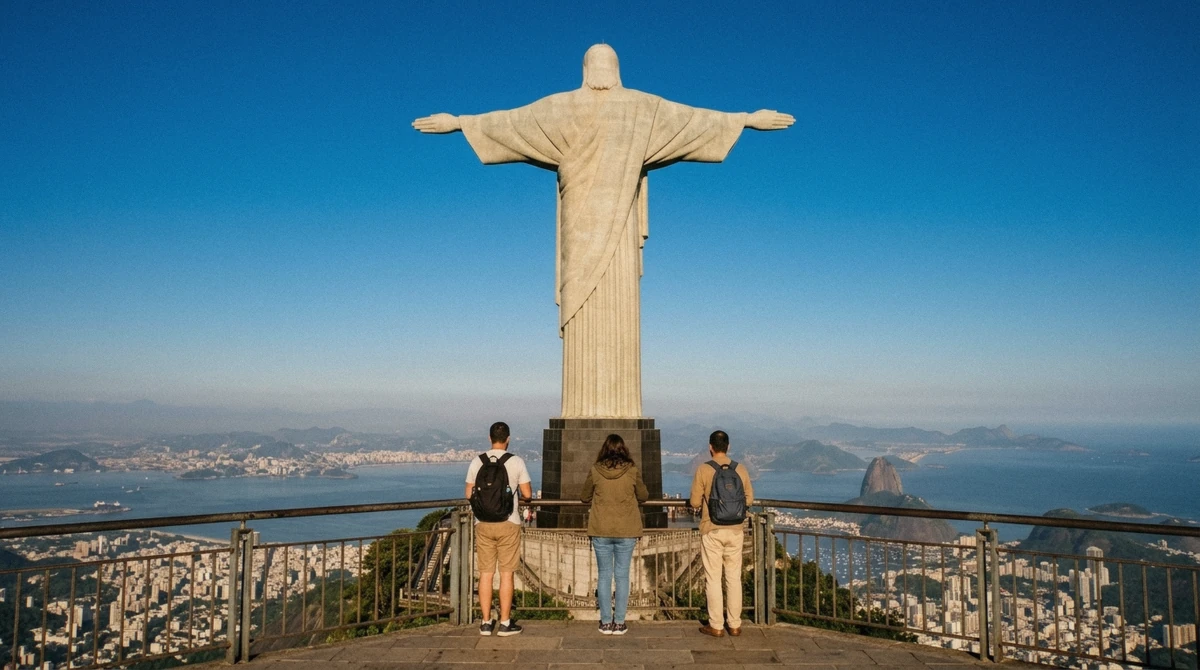
The best time to visit Christ the Redeemer is May through September, the driest and clearest stretch of the year on Corcovado, with June and August the driest months by rainfall and July the coolest by temperature. December and January bring the most rain and the busiest crowds, so treat that pairing as the window to plan around rather than into.
Key takeaways
- Driest months by rainfall: June, at about 132.7mm, and August, at about 141.9mm
- Wettest month: December, at about 273.8mm, alongside the year's busiest crowds
- Warmest month: February, averaging a 30.6°C high
- Quietest hours are early morning and the last afternoon slots; the busiest window runs roughly 10:00 to 15:00
- No source promises a clear view on any date, cloud is a real possibility year-round, see how to get there for the routes that get you up regardless
- High season sellouts hit December and January hardest, so book dated Corcovado entry tickets as early as your dates are firm
Book the Slot That Matches Your Window
Whatever month you land in, these three ways up carry a dated, timed booking.
 from $48
Most Popular — 5,026 Reviews, 4.4★
from $48
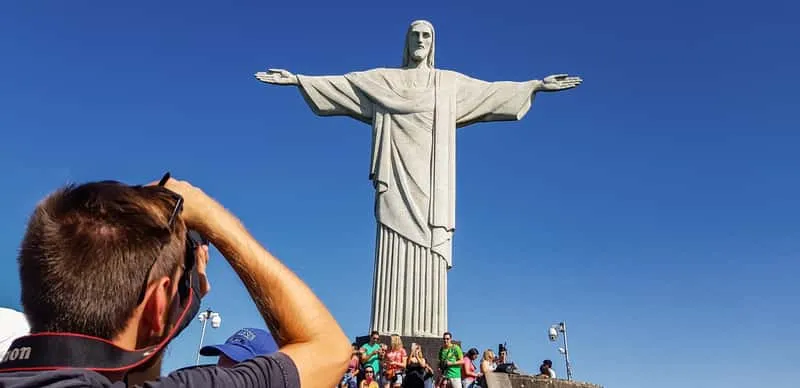
Most Popular — 5,026 Reviews, 4.4★ Christ the Redeemer Entry Ticket by Corcovado Train
The official Christ the Redeemer entry ticket including the scenic Corcovado cog train ride up through Tijuca National Park, the world's largest urban forest. Ride the historic electrified…
- Official Christ the Redeemer entry ticket included
- Scenic cog train ride through Tijuca Forest National Park
- Unique views of Sugarloaf Mountain and Guanabara Bay
- Access to the Christ the Redeemer Museum and Visitors Center
 from $69
5.0★ Rated
from $69
5.0★ Rated Explore Rio: Christ the Redeemer, Selarón & Maracanã in 5 Hours
An efficient 5-hour guided tour bundling Rio's icons into one trip: priority access to Christ the Redeemer, the colorful Selarón Steps, the Lapa Arches and the legendary Maracanã…
- Priority access to Christ the Redeemer for the city views
- Explore the vibrant Selarón Steps and historic Lapa Arches
- Visit the iconic Maracanã Stadium, the heart of football
- Convenient pickup across Zona Sul and downtown Rio
 from $130
Top Rated — 4.6★
from $130
Top Rated — 4.6★ Christ the Redeemer & Sugarloaf Half-Day Tour
A guided half-day tour combining Rio's two most famous landmarks: the Christ the Redeemer statue on Corcovado Hill and the Sugarloaf Mountain cable car. Arrive early to beat…
- Visit Christ the Redeemer and Sugarloaf in one half-day
- Arrive before the crowds at both landmarks
- Ride the Sugarloaf cable car for panoramic bay views
- Small group tour, maximum 19 people, with hotel pickup
Seasons at a Glance
Rio de Janeiro runs on two broad halves rather than four sharp seasons: a warmer, wetter stretch from November through March, and a cooler, drier stretch from May through September, with April and October as the hinge months between them. Corcovado's summit sits at 710 m, a few degrees cooler and considerably windier than the beaches, so pack a layer even on what looks like a warm day down in the city.
That elevation difference is easy to underestimate from a hotel room in Copacabana. A morning that feels merely mild at sea level can carry a real wind chill on the open plateau at the top, especially in June, July and August when the average low drops into the mid-teens Celsius. Bring a light jacket or a windbreaker even on a day that looks warm from below, and keep it in your bag rather than leaving it at the hotel because the forecast said sun.
| Season | On the mountain | Odds of a clear view | Crowds | Verdict |
|---|---|---|---|---|
| Winter, June to August | Highs of 24 to 25C, the driest stretch of the year at 132.7 mm in June and 141.9 mm in August | The best of the year | Steady, well below the summer peak | Best overall |
| Spring, September to November | Highs climbing from 25C to 27C, rain building to 217.0 mm in November | Mixed, with mornings often the clearest part of the day | Moderate outside school holidays | Good value shoulder |
| Summer, December to February | Hot and wet, 30C to 31C highs and 273.8 mm of rain in December | The poorest, with afternoon storms and low cloud | Heaviest of the year | Go at first light or wait |
| Autumn, March to May | Easing from 29C to 25C, rain dropping from 215.7 mm in March to 188.5 mm in May | Improving week by week | Thinning once Carnival is over | Underrated |
Read that table as a bet rather than a forecast. Winter buys you the best odds and the most comfortable temperature at 710 metres, where the wind makes 24C feel cooler than the beach does. Summer is not a write-off, because summer mornings can be brilliantly clear before the heat builds the afternoon cloud, but it is the season where a single booked slot is most likely to be wasted.
If your dates land in December or January, take the earliest slot you can get and keep a spare morning in reserve. Last verified: August 2026.
Month by Month on Corcovado
The numbers below are climatological normals for the 1981-2010 period from INMET, Brazil's national meteorological institute, recorded at the Alto da Boa Vista station: a station sitting at 300 m inside the Tijuca forest, the closest official weather station to Corcovado itself. The year averages 26.9°C high, 17.9°C low and about 2,365.8mm of rain.
| Month | Average high | Average low | Rainfall |
|---|---|---|---|
| January | 30.1°C | 20.7°C | 209.1mm |
| February | 30.6°C | 20.9°C | 174.8mm |
| March | 29.1°C | 20.2°C | 215.7mm |
| April | 27.7°C | 18.8°C | 203.3mm |
| May | 25.2°C | 16.8°C | 188.5mm |
| June | 24.3°C | 15.3°C | 132.7mm |
| July | 24.1°C | 14.8°C | 182.3mm |
| August | 24.7°C | 15.3°C | 141.9mm |
| September | 24.7°C | 16.1°C | 223.0mm |
| October | 25.9°C | 17.3°C | 203.7mm |
| November | 27.3°C | 18.6°C | 217.0mm |
| December | 28.7°C | 19.8°C | 273.8mm |
Read this by two axes rather than one. On temperature, July is the coolest month on the mountain, with an average high of just 24.1°C and an average low of 14.8°C, cool enough for a jacket at the summit even at midday; February is the warmest, averaging a 30.6°C high with the humidity to match. On rain, June is the driest month in the Tijuca forest at about 132.7mm, with August close behind at roughly 141.9mm; December is the wettest by a clear margin at about 273.8mm, and it's not a coincidence that December is also peak season below.
The takeaway that matters for a trip: temperature and rainfall don't peak together here, so pick your priority (cool and dry versus warm and humid) rather than assuming one month wins on both.
The Cloud Gamble, Honestly
The summit genuinely spends real time inside cloud, and nobody can promise a clear view on your date, not the operators, not the park authority, not us. There is no official webcam and no published fog forecast for Corcovado, so the closest thing to a forecast is the seasonal pattern: mornings are more often clear than afternoons, and the May-to-September stretch clears more reliably than December and January, when afternoon storms can hide the statue completely for hours.
A hidden statue is not the same as a wasted trip. Even on a cloudy morning the ride up, the forest, the chapel and the plateau itself are still worth the visit, and cloud at Corcovado does not necessarily mean cloud over the whole city; the beaches below can sit under open sky while the summit stays wrapped in grey. Build one spare morning into a multi-day Rio trip if a clear photograph matters to you, rather than staking the whole visit on a single dated slot.
The Best Hour of the Day
The Sanctuary holds an opening blessing between 7:30 and 8:00, and the plateau opens to visitors after it, which makes the earliest slots of the day both the calmest and, by visitor and operator reports, the most likely to catch clearer air before cloud has a chance to build over the ridge through the warmth of the morning.
Crowds follow a predictable curve. Visitors and operators consistently report that the busiest window runs roughly 10:00 to 15:00, when tour groups and day-trippers overlap at the summit. Early morning and the last slots of the afternoon are the quietest stretches, and they double as your best odds against both crowds and cloud in the same booking.
Best Season by Traveler Type
If you want the driest, coolest air on the mountain
go in June, July or August. June and August are the driest months by rainfall, and July is the coolest by temperature
If you have one shot and can't reschedule
book an early morning slot in May, June or September, when cloud odds run lowest and crowds are lighter than peak season
If you're traveling with kids and want the calmest heat
aim for June through August, when the average high sits around 24°C instead of near 30°C
If you want the lowest prices and don't mind more rain risk
shoulder months like April or October trade a bit more rain for a quieter, less booked-out calendar
If your dates are fixed for December or January
book as far ahead as those dates are firm, take the earliest slot you can get, and accept the higher odds of an afternoon storm
Crowds Through the Year
High season on Corcovado runs December and January, plus weekends and public holidays throughout the year, when the park authority's own reporting describes slots and queues running longest. That's also the wettest stretch on the climate table above, so the crowds and the weather risk stack in the same window rather than offsetting each other.
No official source publishes a specific number of days to book ahead, so we won't invent one here. The honest guidance is simpler: book as far ahead as your dates are firm, and book further ahead the closer your visit falls to December, January, a weekend, or a Brazilian public holiday. Outside that window, a booking made a few days out is typically enough for a dated slot.
| When you go up | What the plateau feels like | What it costs you |
|---|---|---|
| The first slots after the plateau opens | Thinnest crowd of the day and the cleanest air | An early alarm, and the light is still low on the western side |
| Roughly 10:00 to 15:00 | The reported peak, with several arrivals stacking up at once | Queues at the stairs and very little room to compose a photograph |
| Mid to late afternoon | Thinning again as the morning groups leave | Rising odds of cloud and, in summer, of a storm |
Those windows matter more than usual right now. With simultaneous capacity on the plateau cut by half while the escalators are replaced, the same number of arrivals fills the space twice as fast, and the queue for the stairs is where you feel it. What to expect at the summit sets out what the works actually change.
When the Summit Is Worst
If you want the single window to plan around rather than into, it's December and January together: the wettest month on the calendar sits right next to the year's busiest crowds, and afternoon storms in that stretch can hide the statue for hours at a time. None of that makes a December or January trip a mistake, plenty of visitors only have those dates, but it does mean booking the earliest slot you can get and treating a clear view as a bonus rather than a guarantee.
It's also worth knowing that escalator replacement works are running at the summit from 3 August 2026 through about the end of May 2027, cutting maximum simultaneous capacity by 50% for every arrival method while stone steps stand in for the escalators on the last stretch. That doesn't change which month is driest, but it does mean the plateau itself moves more slowly than usual through that whole window, whichever season you land in.
So When Should You Go
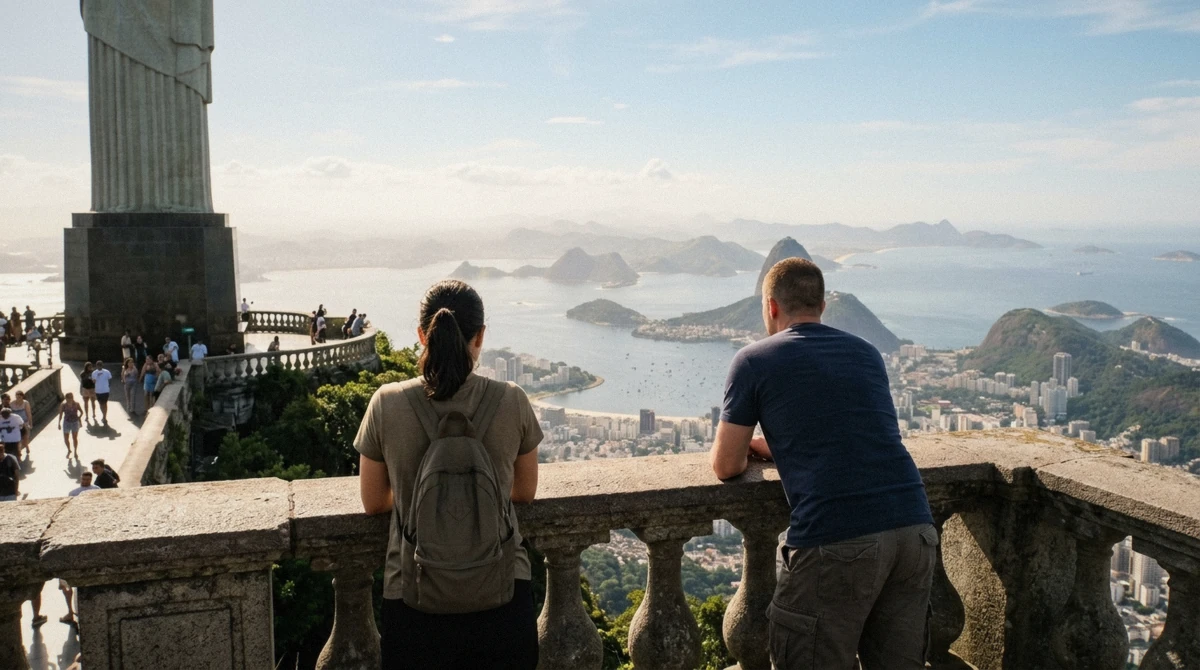
Prices in this guide are converted at about R$5.18 to the dollar in August 2026. For the best combined odds of clear skies, cooler air and manageable crowds, aim for May through September, with June and August the driest months by rainfall and July the coolest by temperature. If your trip has to land in the shoulder months, April and October are a reasonable compromise, cheaper and quieter than peak season with only moderately more rain risk.
December and January are the months to plan around, not skip outright: book early, take a morning slot, and treat a clear statue as a bonus rather than a promise on any given day.
Whichever month you land in, the mechanics of actually reaching the summit don't change with the season; the full breakdown of the train, van and trail options covers what each route costs and where it leaves from.
Frequently Asked Questions
What is the best month to visit Christ the Redeemer?
July, the coolest month on INMET's climate normals for the Alto da Boa Vista station at a 24.1°C average high and a 14.8°C average low, with June and August close behind as the driest months by rainfall.
What time of day is best at Christ the Redeemer?
The earliest slots after the Sanctuary's opening blessing between 7:30 and 8:00, before cloud typically builds over the ridge and before the busiest crowd window of roughly 10:00 to 15:00 fills the plateau.
Is Christ the Redeemer often covered in cloud?
Yes, genuinely and unpredictably. There's no official webcam or fog forecast, and no operator can promise a clear view; the May-to-September stretch clears more reliably than December and January, but cloud is possible in any month.
When is Christ the Redeemer least crowded?
Early morning and the last slots of the afternoon, outside the roughly 10:00 to 15:00 busiest window, and outside December, January, weekends and public holidays.
What happens if it rains on the day of your ticket?
Light rain often doesn't cancel a visit outright, though a genuine storm can. There's no published refund-by-weather number to quote here, so check the specific cancellation terms on your ticket or tour, such as the Corcovado train entry ticket, before you book.
How far ahead should you book in high season?
There's no official day-count to give, but book as far ahead as your dates are firm, and earlier still for December, January, weekends or a Brazilian public holiday, when the park authority reports the longest queues and slots filling fastest.
Does the weather at the summit match the weather at the beach?
Not always. Corcovado sits at 710 m, cooler and windier than the coast, and the summit can hold cloud while the beaches below sit under clear sky, or the reverse.
There is no month that guarantees a clear photograph at the top of Corcovado, but there is a month that stacks the odds in your favor: aim for the dry season, book an early slot, and go in knowing that even a cloudy morning is still a real visit to a real mountain, not a wasted one.